Crimson Flow
| Medium | Acrylic on canvas |
|---|---|
| Dimensions | 24 × 36 " |
| Availability | Available |
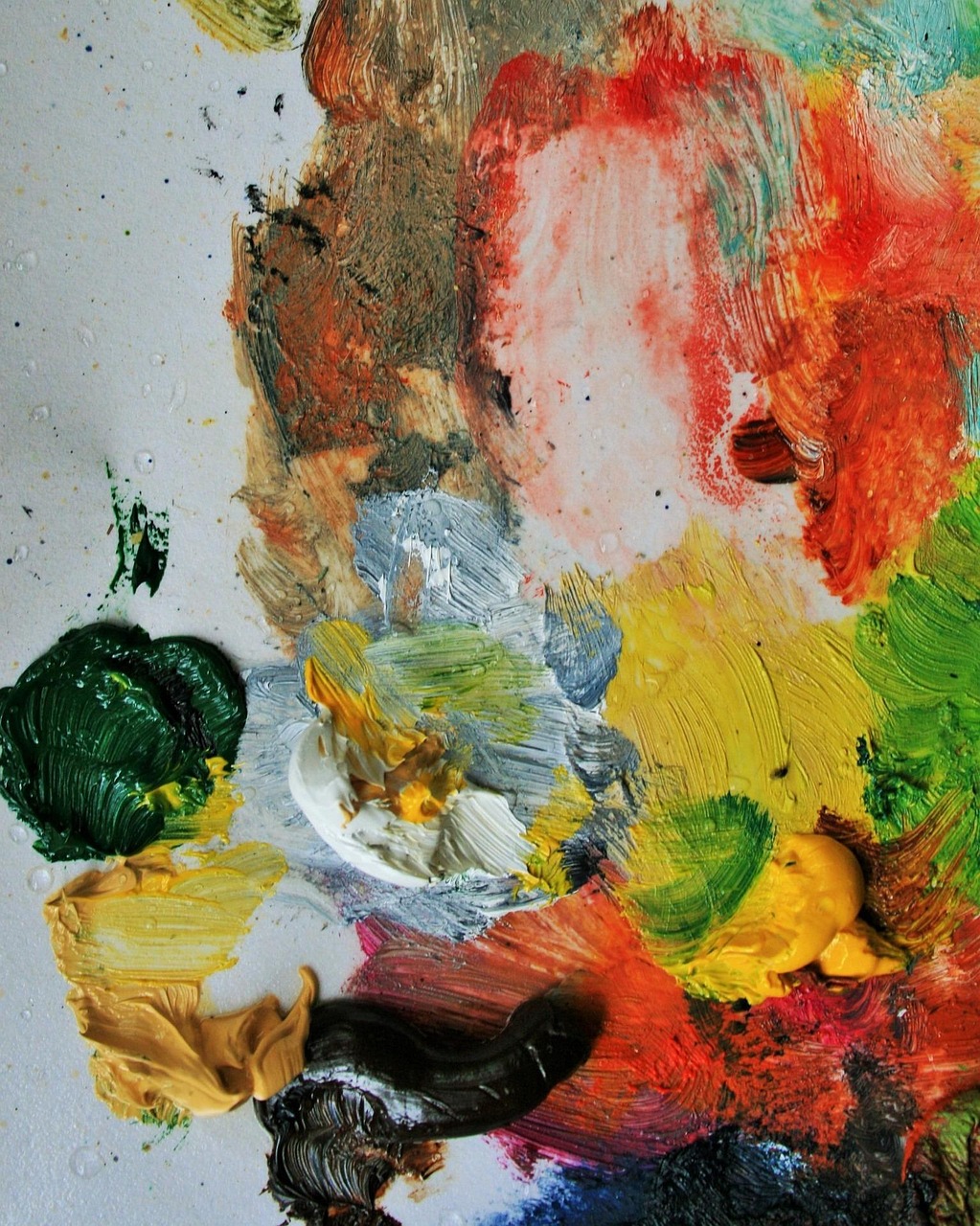
A vivid exploration of movement and colour through bold, gestural acrylic strokes. The painting invites the viewer into a world of raw emotion and kinetic energy.
The Journey
How this piece found its way from first mark to final form.
Before the Canvas
I'd been carrying this painting for about three weeks before I touched it.
Not in any conscious way. There was no sketch, no plan. But something was accumulating — the quality of late afternoon light through the studio window, a conversation about entropy, the way a certain red behaves when it's still wet and you drag something fast through it.
Eventually the accumulation reaches a threshold. The painting doesn't start when you pick up the brush. It starts much earlier than that, when something you've been turning over quietly finally asks to be made.
The First Pour
I didn't use a brush for the first hour.
Acrylic straight from the tube, diluted with medium until it was almost liquid, poured and tilted across the canvas. You lose control immediately. The painting makes decisions you didn't make, and the only skill at this stage is knowing when to let it run and when to catch it.
There was a moment — the paint moving east across the canvas, a trail of red breaking into orange at the very edge — where I thought: there it is. I don't know what it is yet. But it's there.
The Trouble With Red
Red is the most argumentative colour.
It doesn't sit quietly next to anything. It claims everything around it, changes the temperature of every other mark, fights with shadow in ways that blue and green don't. I spent two full sessions just managing what the red wanted to do versus what the piece needed it to do.
I almost painted over the whole thing twice. Both times I walked away and came back the next morning. Both times the problem had solved itself overnight — not because anything changed, but because I had.
The Last Mark
The final stroke was a thin horizontal drag across the lower third of the canvas. Black mixed with raw umber, barely there.
I don't know why it was right. It gave the movement somewhere to rest — the eye travels up through the red, gets caught in the energy of the gestural strokes, and then lands. Settles. The piece needed a floor.
I've learned not to question the last mark. When a painting is finished, you know it the same way you know a sentence is finished — not by counting the words, but because anything more would be too much.