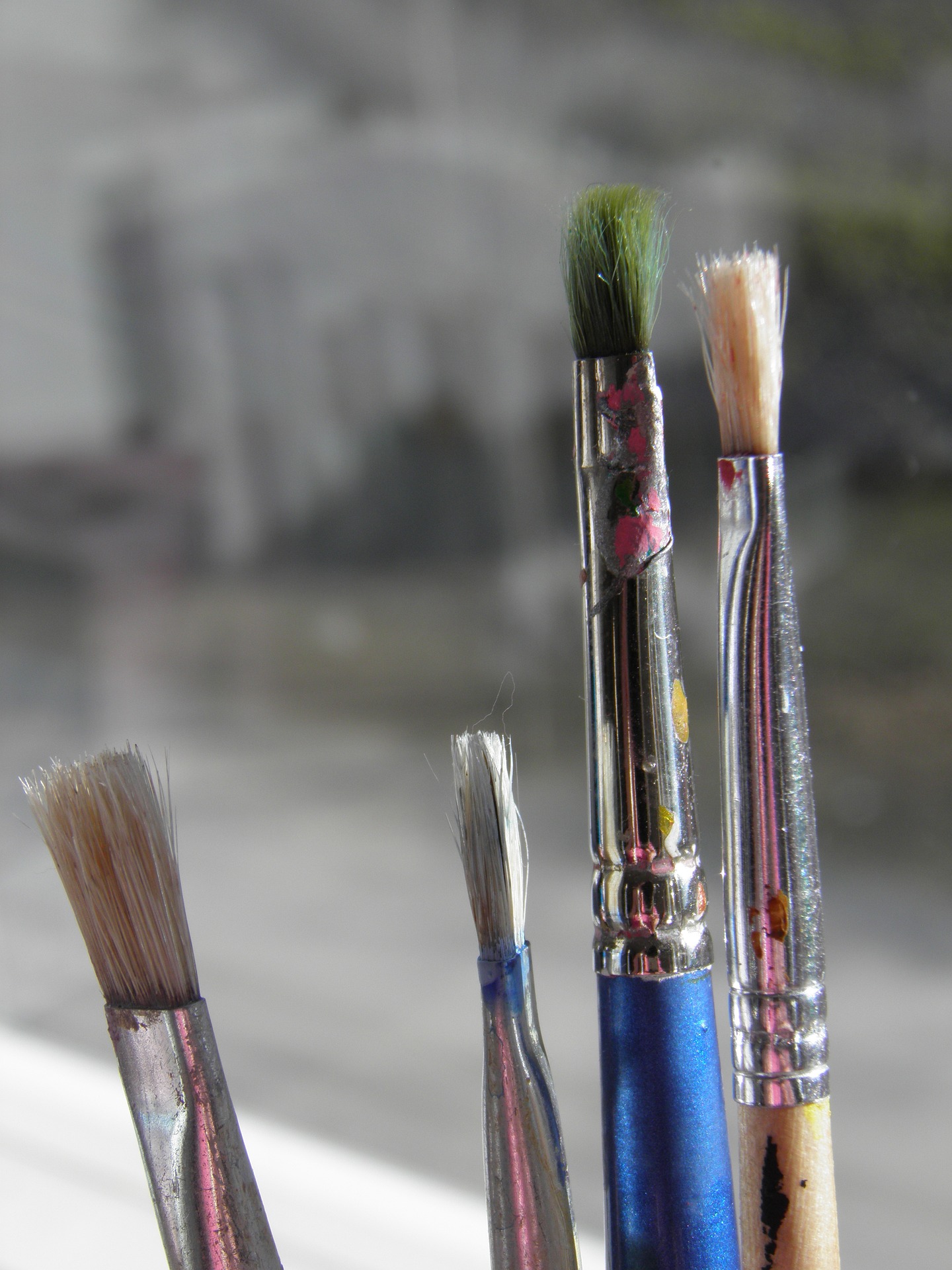
Brushwork Series I
| Medium | Mixed media |
|---|---|
| Dimensions | 12 × 12 " |
| Availability | Available |
The first in an ongoing series celebrating the poetry of the brush itself — the primary instrument of the painter's voice.
The Journey
How this piece found its way from first mark to final form.
The Question That Started Everything
The question came out of a conversation about the invisible: what if the subject of a painting was the act of painting itself?
Not in a theoretical way. Literally — what if the mark the brush makes, the specific character of a loaded bristle dragged across a surface, was the thing being studied?
I'd been making work about other things my whole career. I wanted to make work about this. The brush, the medium, the surface, the pressure, the speed, the hesitation, the confidence — all of it, made visible and honest.
Learning to Not Know
The hardest part of the Brushwork Series wasn't technical. It was psychological.
I had to unlearn the impulse to control. Every mark I made wanted to be in the service of something else — a form, a space, a colour relationship. For this series, the mark had to be the end point, not a means to one.
I worked through thirty failed starts before I found the first piece in the series. Each failure taught me something about my own habits — the way I default to suggestion rather than declaration, the way I manage the brush rather than listening to it. The series began when I stopped managing.
When the Brush Started Teaching
Somewhere around the eighth session, something shifted.
I stopped thinking about what the brush should do and started paying attention to what it was doing. The way a flat bristle fans at the end of a long stroke. The dry edge of an almost-empty load. The weight difference between a brush in the air and a brush on the surface — that resistance, that give.
I understood for the first time that a brush has a voice. Every brush is a different instrument. I'd been playing them all in the same key. This piece, finally, let each one speak as itself.